Which addition route are you leaning toward?
Pick the route you would price first if bids went out next month.
No votes yet. Yours will be the first. · saved on this device
Loading...
Addition Scope · Build an addition vs Sell and buy a bigger house
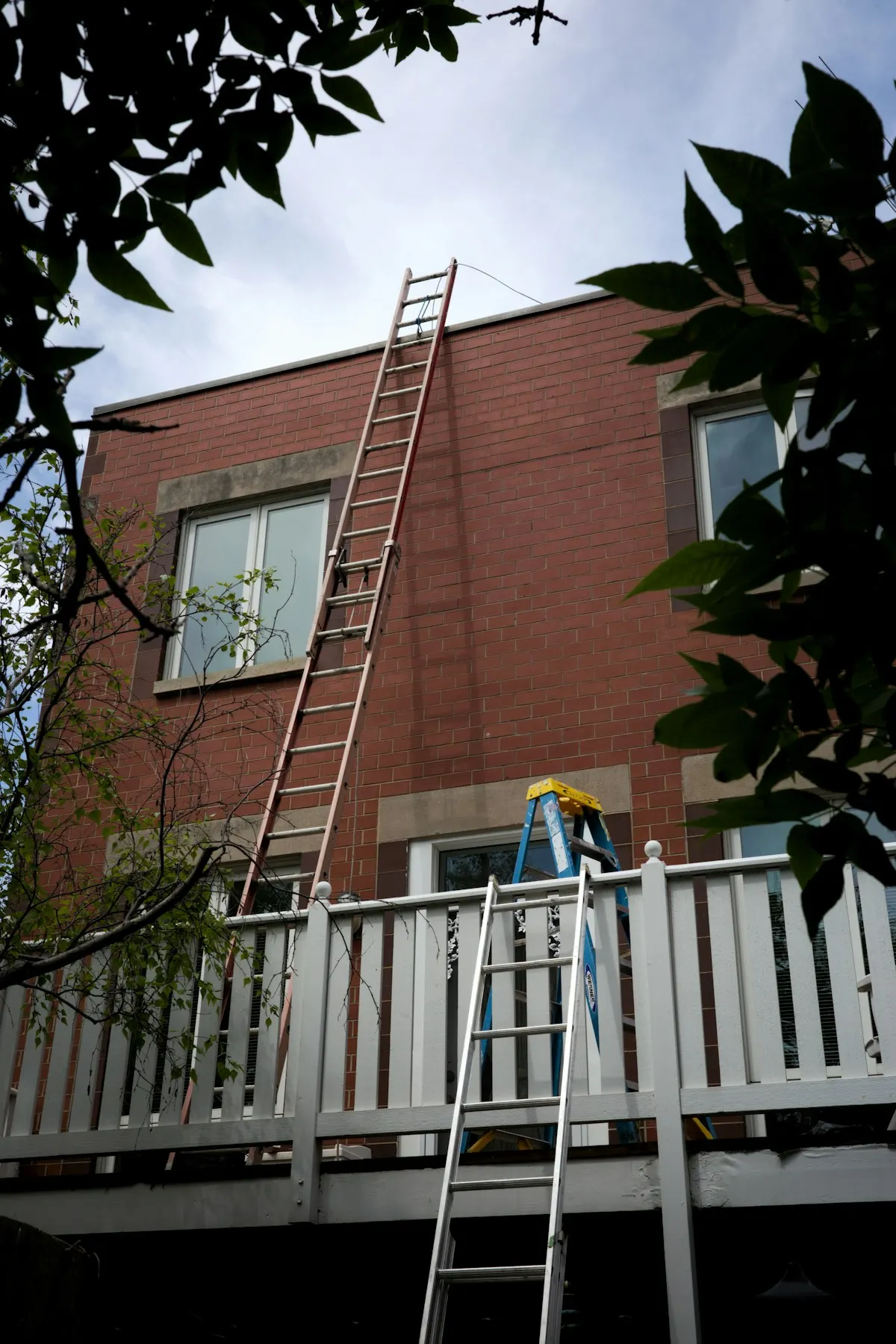
For one or two rooms, adding on usually costs less than moving. HomeAdvisor's 2026 average addition is $51,000, while HomeLight puts seller closing costs at 1 to 3 percent of the sale price plus 3 to 6 percent in commissions, roughly $16,000 to $36,000 on a $398,000 home, spent before the next house adds a single square foot.
Photo: Cam Ballard · License.
Every addition decision starts with a quieter question: why not just move? The two routes spend money in different ways. An addition turns cash into square footage on a lot the household already chose. A move turns a share of the sale price into commissions, title and settlement fees, and movers, then buys space at whatever the local market charges for it.
This page sets the published costs of each route side by side, works an example on a median-priced home, and says when each one wins. The figures come from HomeAdvisor's June 2026 addition guide, HomeLight's March 2026 guide to selling costs, Zonda's 2025 Cost vs. Value report and our own analysis of EIA household survey data. Local prices will differ; the structure of the comparison will not.
An addition spends the money on new square footage in a location the household already chose, at HomeAdvisor's $51,000 average. Moving spends a share of the sale price on commissions and closing costs before any space is gained, but it can solve problems an addition cannot, such as a small lot, a long commute or the wrong school district.
| Factor | Build an addition | Sell and buy a bigger house |
|---|---|---|
| Upfront cost | $51,000 average; $80–$210 per sq ft for ground-level space (HomeAdvisor, 2026) | Seller closing costs of 1–3% plus listing commission near 3%, up to about 6% with the buyer's agent (HomeLight, 2026); moving and the next home's price extra |
| What the money buys | New rooms, built to your plan | A different house and location; transaction costs buy no space |
| Mortgage | Existing rate kept; addition financed by equity loan, refinance or cash | New loan at current rates on a larger balance |
| Disruption | Two to four months of construction for a ground-floor room; four to eight for a second story | Listing, showings, closing and a move; weeks to months |
| Lot and location fit | Needs setback room, lot coverage and a sound structure | Solves lots that cannot grow and locations the household wants to leave |
| Timeline | Plan review of two to eight weeks, then construction (CADTRI, 2026) | Depends on the local market and on finding the right house |
| Resale and ROI | Bathroom addition recoups 53.3%, primary suite 32.3% (Zonda, 2025) | Selling costs are not recovered; the next house appreciates with its market |
| Best for | Households that like their neighborhood and have a buildable lot | Households that need a different location, lot or school, or several rooms a lot cannot hold |
Add on when the location is the reason you bought, the lot has buildable room, and the space you need is a room or two rather than a different house. The money goes into square footage instead of commissions, and the household keeps its mortgage. A bedroom and bath off the back of the house, priced on the room addition cost page, is the case where adding on wins most often.
Move when the lot cannot grow, the engineer rules out a second story, the commute or schools are the real problem, or the gap between the house you have and the house you need is several rooms. Transaction costs are a known, one-time charge; an addition that fights its lot can cost more than those fees and still leave the household in the wrong place.
HomeAdvisor's June 2026 guide puts the average home addition at $51,000 and ground-level space at $80–$210 / sq ft, labor and materials included. Every dollar of that buys floor area. Selling works the other way: HomeLight's March 2026 guide puts seller closing costs for title, settlement and taxes at 1–3% of the sale price, and listing commission at about 3 percent, rising to about 6 percent when the seller also pays the buyer's agent after the NAR settlement. HomeLight cites $600 to $5,000 for a short-distance move.
The table in this section applies those published rates to a house at the $398,000 median sale price HomeLight cites from NAR, against additions of two common sizes. Selling costs are 4 to 9 percent of the price, which is what the closing-cost and commission ranges add up to. The buyer's own closing costs on the next house, and any price difference between the two houses, come on top of the moving column.
| Cost line | Low | High | Source |
|---|---|---|---|
| Seller closing costs, 1–3% of $398,000 | $3,980 | $11,940 | HomeLight, 2026 |
| Agent commission, 3–6% of $398,000 | $11,940 | $23,880 | HomeLight, 2026 |
| Local move | $600 | $5,000 | HomeLight, 2026 |
| Cost to move before buying any space | $16,520 | $40,820 | Sum of the three rows |
| 200 sq ft ground-level addition | $16,000 | $42,000 | HomeAdvisor, 2026 |
| 400 sq ft ground-level addition | $32,000 | $84,000 | HomeAdvisor, 2026 |
Add on when the house is right apart from one missing room. The most common missing room is a bathroom: our analysis of EIA's 2024 household survey found 38.6% of homes have exactly one full bathroom, and the one-bathroom share runs 29.7 pts higher in owner-occupied houses built before 1990. A bath or a bedroom suite on a lot with setback room is a contained project, and HomeAdvisor's $35,000 bathroom average sits close to the cost of simply selling a median home.
Move when the problem is the location or the lot rather than the floor plan. A household that wants a shorter commute, a different school or a yard the current lot cannot give will not fix any of that with an addition. The same is true when the gap is several rooms on a lot that is already at its coverage limit, or when an engineer finds the foundation cannot carry a second story. In those cases the addition either cannot be built or would cost more than the move and still leave the household where it did not want to be.
A third group sits in between: households that like the neighborhood but need a room for a parent. For them the garage conversion versus detached ADU comparison is often the better next step than either a conventional addition or a move.
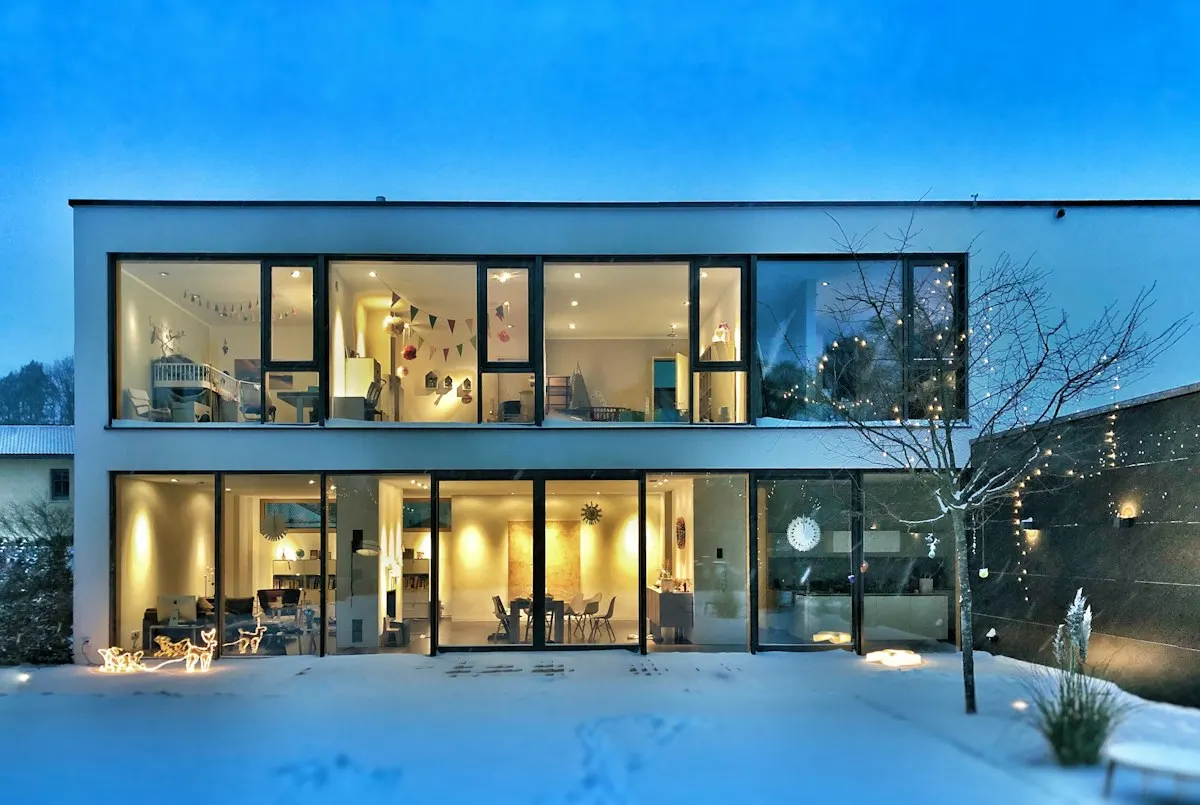
Over a decade, the mortgage often decides it. An addition keeps the existing loan and finances the work with a home equity loan, a line of credit or a cash-out refinance. A move replaces the loan entirely at current rates on what is usually a larger balance. TD Bank's 2025 survey found 74% of recent buyers plan to stay at least two more years, with rate lock-in the reason most often cited, which is the same arithmetic playing out across the market.
Selling costs are a one-time charge that never comes back. An addition's cost is partly recovered at sale and partly repaid in use: the room is lived in every day for ten years. The longer the household stays, the more an addition's use value outweighs its resale shortfall, and the more a move's transaction costs look like the price of a location change rather than the price of space. If a second move is likely within a few years, the math shifts toward staying put and building nothing large.
An addition is only an option if the lot allows it. Setbacks, lot coverage, height limits and floor-area ratios decide whether a ground-floor room fits, and CADTRI puts plan review at 2–8 weeks before construction starts. A second story adds the structural question, since the footings and walls must carry the new floor. Check both before comparing prices, because an addition the zoning code will not allow has no price.
Climate adds cost to additions in predictable places: deeper footings where the frost line is deep, hurricane strapping on the Gulf and Atlantic coasts, shear walls in seismic zones. Those costs are part of the per-square-foot range, not a surcharge on top. Moving has its own regional cost, since commissions and transfer taxes vary by state and city. Ask a local agent for a net sheet before treating the national percentages as your number.
Less than it costs, and that is normal. Zonda's 2025 Cost vs. Value report found a midrange bathroom addition recoups 53.3% of its cost at sale and a midrange primary suite recoups 32.3%. Those ratios assume a sale soon after the work is finished, so they measure what a buyer pays for the space, not what the household gets from using it.
The fair comparison is against the move's own unrecovered costs. Commissions and closing fees recoup nothing; they are the price of the transaction. An addition that recovers half its cost and serves a household for a decade can beat a move whose fees buy only the chance to pay market price for the same extra room elsewhere. The addition cost guide sets out resale ratios by route.
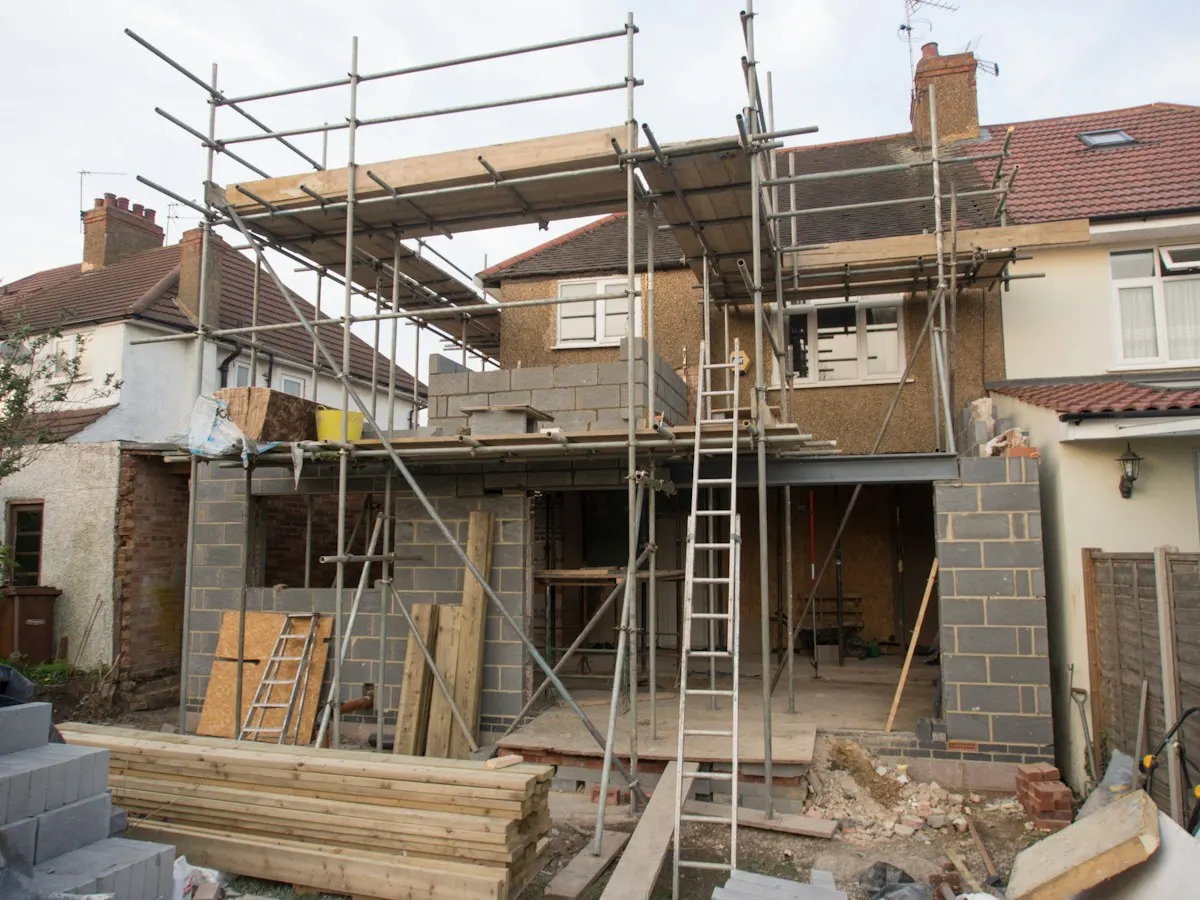
Most come from comparing the wrong numbers. Owners set an addition's full bid against only the commission on a sale, leaving out closing costs, the move itself, the buyer-side costs on the next house and the higher price of a bigger home. Others take a per-square-foot addition price from a national guide and set it against a local bid, or forget that an addition's soft costs sit outside the per-foot figure.
Build both numbers on the same basis. For the addition, get written bids on a shared scope that list design, engineering, permits, the connection to the existing house and any HVAC or electrical upgrade as separate lines, then add a contingency. The addition cost calculator gives a first figure to test bids against. For the move, ask a local agent for an estimated net sheet showing commissions, title, transfer taxes and credits, then add movers and the buyer-side costs on the next house.
Set the difference between the two totals against what each route delivers. If the addition gives the household the room it needs in the place it wants to be, for less cash than the move's unrecovered costs plus the premium for a bigger house, it wins. If the move solves problems the addition cannot touch, the transaction costs are the price of those fixes. Our estimate request form collects the scope details builders need to price the addition side.
Homeowner polls
Pick the route you would price first if bids went out next month.
No votes yet. Yours will be the first. · saved on this device
No votes yet. Yours will be the first. · saved on this device
Angi's 2026 typical range is $21,891 to $83,356; Zonda's midrange primary suite is $170,517.
No votes yet. Yours will be the first. · saved on this device
For a single room, adding on usually costs less in cash. HomeLight's 2026 figures put seller closing costs at 1 to 3 percent of the sale price plus 3 to 6 percent in commissions, which on a $398,000 home is roughly $16,000 to $36,000 before moving, against $32,000 to $84,000 for a 400 square foot addition at HomeAdvisor's rates that delivers new space.
Only in part. Zonda's 2025 report puts a midrange bathroom addition's recovery at 53.3 percent and a midrange primary suite's at 32.3 percent. An addition makes most sense for households that plan to stay long enough to use the space.
HomeLight's March 2026 guide puts seller closing costs at 1 to 3 percent of the sale price and listing commission at about 3 percent, or about 6 percent if the seller also covers the buyer's agent. Closing costs and commission together come to roughly 4 to 9 percent of the price, and a local move adds $600 to $5,000 by the figures HomeLight cites.
Roughly a 200 square foot room. HomeAdvisor's 2026 rates put 200 square feet at $16,000 to $42,000, close to the $16,520 to $40,820 it costs to sell a $398,000 home and move locally at HomeLight's published rates. The addition delivers a room; the sale delivers none by itself.
Usually only a modest project. Zonda's 2025 report shows midrange bathroom additions recovering 53.3 percent and primary suites 32.3 percent at sale, so a short stay leaves most of a large addition's cost unrecovered. A bathroom or a small bedroom that fixes an obvious gap is the safer spend.
Usually. Permitted work that adds living area typically triggers a reassessment. A move resets the assessment to the new purchase price in many places, which can raise taxes more. Ask the assessor's office how each would be valued.
Common routes are a home equity loan or line, a cash-out refinance, or a renovation loan based on the home's value after the work. Houzz reports that secured home loans fund 18% of renovations in the $50,000 to $200,000 range. Compare the payment with a new mortgage on a bigger house.
 ComparisonBuild out (ground-floor addition) vs Build up (second-story addition)
Build out when the lot has room within its setbacks and coverage limits, the household wants to stay home during work and the budget is tight per square foot.
 ComparisonGarage conversion to ADU vs New detached ADU
Convert the garage when its slab, walls and roof are sound, it sits where zoning allows a unit and the budget is limited.
 ComparisonBump-out extension vs Full room addition
Choose a bump-out when one existing room is cramped and a few extra feet would fix it, such as fitting a kitchen island, a larger shower or a closet.
 ComparisonSunroom (three- or four-season) vs Conventional room addition
Choose a sunroom when you want a bright sitting or plant room, mostly for mild seasons, at a lower price and faster build.
 ComparisonAttic conversion vs Second-story addition
Convert the attic when the roof is steep enough for code headroom over a useful area, the joists can be reinforced and one or two rooms are enough.
 Service guideRoom Additions
A room addition builds new ground-floor space on its own foundation, tied into the existing walls and roof, to add a bedroom, family room, kitchen extension, bathroom or primary suite.
 Service guideSecond Story Additions
A second-story addition builds a new floor on top of an existing house, either over the whole footprint or over part of it, after an engineer confirms the foundation and walls can carry the load.
 Service guideADU & Garage Conversions
An accessory dwelling unit is a second, self-contained living space on a single-family lot, built by converting a garage or basement, adding onto the house, or constructing a detached unit.
 Free toolHome addition cost calculator
Size, material tier and complexity in, a realistic budget range out.
 Free toolAddition feasibility quiz: do you know what decides your project?
9 questions that show what you already know and what to check next.
 Free toolAddition polls: what other planners chose, feared and cut
See what other planners chose and add your vote.
Tell us the size, the condition of what is there now, and what you want to change. Addition Scope passes your request to independent local professionals, who reply with written, no-obligation estimates. The service is free to use.